What Are the Best Orthopedic Instruments from China?

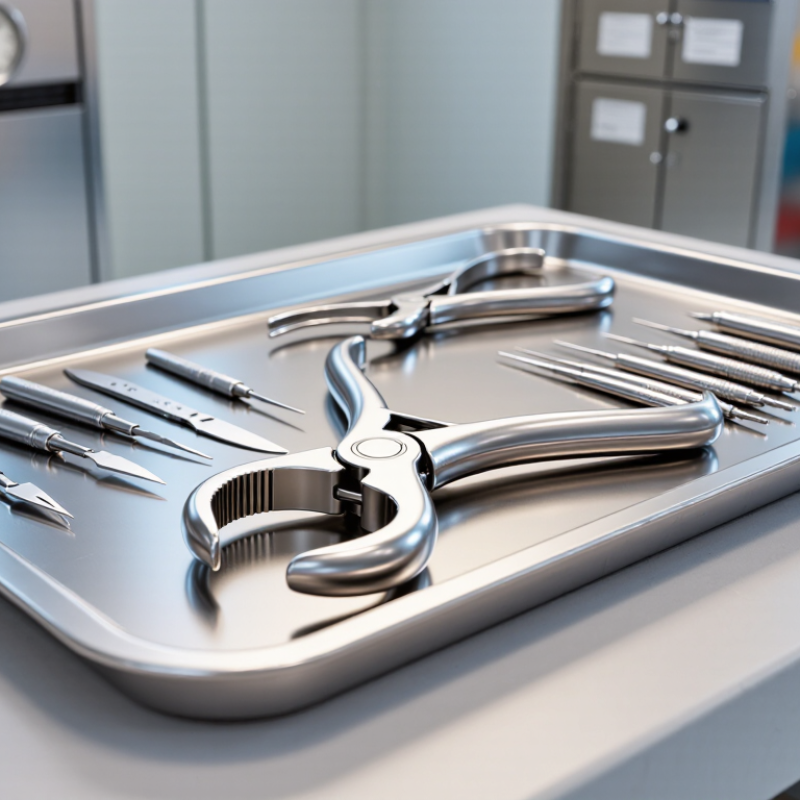
Choosing the best orthopedic instruments from China requires more than comparing prices or browsing attractive catalogs. Hospitals and distributors must examine material quality, manufacturing control, sterilization compatibility, and long-term performance. A bone rongeur should open smoothly. Its jaws should meet evenly, without rough edges or excessive play. Small details can affect surgical confidence.

Sir John Charnley, a pioneer in modern orthopedic surgery, often emphasized a surgeon’s responsibility to understand limitations. His principle, “The surgeon must know his limitations,” remains relevant when evaluating orthopedic instruments. Even an experienced surgeon depends on dependable tools, documented testing, and consistent maintenance. This is where reputable Chinese manufacturers can provide value. Many operate advanced CNC workshops, inspect stainless-steel hardness, and maintain traceability from raw material to finished instrument. However, quality is not uniform across every supplier. That assumption would be careless.

A reliable evaluation should include ISO 13485 certification, batch inspection records, sample testing, and clear communication about intended use. Buyers should also review hinge movement, surface finishing, corrosion resistance, packaging, and replacement support. Direct factory visits may reveal practical evidence, such as calibrated gauges, clean assembly areas, and labeled inspection stations. Product photographs cannot show everything. Some questions will remain unanswered until instruments are tested in real clinical workflows. Therefore, this guide compares leading Chinese orthopedic instruments through a professional lens, balancing technical specifications, user experience, compliance, and total purchasing risk. The best choice is not always the cheapest one. It is the instrument that performs consistently when precision matters most.
What Are the Best Orthopedic Instruments from China?

Defining Orthopedic Instruments and Their Clinical Applications

What Are the Best Orthopedic Instruments from China?
Defining Orthopedic Instruments and Their Clinical Applications

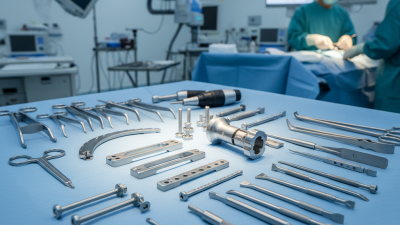
Orthopedic instruments are reusable or single-use tools designed to cut, shape, hold, measure, or position musculoskeletal tissue. Common examples include bone saws, osteotomes, retractors, drill systems, alignment guides, and forceps. They support trauma fixation, joint replacement, spinal procedures, and sports-medicine surgery. The World Health Organization reported that musculoskeletal conditions affect about 1.71 billion people worldwide. That burden makes reliable instruments clinically important, not merely commercially attractive.

In practice, a strong Chinese instrument should offer stable geometry, controlled hand force, clear markings, and dependable sterilization compatibility. A retractor must hold exposure without slipping. A drill guide must maintain its axis under pressure. Small errors matter. For joint procedures, trial instruments should reproduce planned alignment and fit. For fracture surgery, depth gauges and reduction tools need readable scales and predictable movement. ISO 13485 quality systems and ISO 14971 risk management provide useful benchmarks, while clinical teams should still verify validation records, material certificates, cleaning instructions, and traceability.

Market data also requires careful reading. Grand View Research estimated the global orthopedic devices market at over 55 billion US dollars in 2023. That figure includes implants, equipment, and instruments, so it cannot prove that one instrument set is superior. A lower quotation may reflect efficient manufacturing, but it may also hide weaker inspection or limited service support. I would compare fatigue testing, corrosion resistance, dimensional tolerance, and surgeon feedback before purchasing. Catalog photographs are not enough. Sometimes, the overlooked detail is the handle texture.

Key Types of Orthopedic Instruments Made in China

Orthopedic instruments made in China cover a broad range of surgical needs. Common categories include bone saws, orthopedic drills, reamers, osteotomes, rongeurs, forceps, retractors, and reduction clamps. Each tool supports a specific task, from shaping bone to holding a fracture during fixation. The best choice depends on surgical technique, material quality, ergonomics, and documented inspection.

Many Chinese manufacturers produce instruments from surgical stainless steel, with finishes designed to resist corrosion and repeated sterilization. Some suppliers offer modular drill systems, powered handpieces, and instrument sets organized for trauma or joint procedures. In practical use, balanced handles can reduce hand fatigue, while precise jaws improve control around small bone fragments. Fit matters most. A technically attractive instrument may still feel awkward in a surgeon’s hand.

Reliable evaluation should include dimensional checks, surface inspection, cleaning compatibility, and traceability records. Look for quality systems such as ISO 13485, but certification alone does not prove excellent performance. Sample testing and feedback from experienced operating-room staff remain important. I have found that small details, such as a stiff hinge or unclear size markings, can slow a procedure. That gap matters. Chinese orthopedic instruments can offer strong value, yet buyers should compare verified specifications, service support, and consistency across production batches rather than choosing by price alone.

Materials, Manufacturing Standards, and Quality Control

Choosing orthopedic instruments from China requires more than comparing prices. Materials, manufacturing standards, and quality control determine clinical reliability. Stainless steel instruments should meet recognized grades such as ASTM F899, while implant materials commonly follow ASTM F138 or ISO 5832-1 requirements. These standards address corrosion resistance, composition, and mechanical performance. Small details matter. A rough joint can damage gloves or hinder sterilization.

Manufacturing evidence should include ISO 13485 certification, validated heat treatment, and documented process controls. The ISO Survey of Management System Standard Certifications, 2023, recorded tens of thousands of ISO 13485 certificates worldwide, showing its importance as a baseline rather than a guarantee. A factory visit should examine CNC machining, laser marking, passivation, cleaning, and final inspection. Ask for batch records, calibration logs, and material certificates. Photos are not enough.

Independent testing adds stronger assurance. The 2024 Fortune Business Insights report valued the global orthopedic devices market at approximately 39.5 billion dollars in 2023, increasing pressure on suppliers to scale production consistently. Yet scale can hide weaknesses. Sampling plans should follow ISO 2859-1, with checks for dimensions, surface defects, hardness, and packaging integrity. Sterility claims require validated processes, not confident wording. I would also review complaint trends and failed-batch investigations. No supplier is perfect. The useful question is whether problems are detected early, documented honestly, and corrected effectively.

How to Evaluate Chinese Orthopedic Instrument Suppliers

Choosing the best orthopedic instruments from China begins with evaluating the supplier, not admiring the catalog. A reliable supplier should explain material grades, machining tolerances, surface finishing, and inspection methods. Ask for batch records and traceability details. These documents matter when a small defect appears months later.

Request samples that match your intended procedures. Examine jaw alignment, handle balance, locking force, and edge consistency under practical conditions. Instruments should tolerate repeated cleaning and sterilization according to their validated instructions. Check whether the supplier maintains a documented quality system, such as ISO 13485, and verify registrations required in your market. Certificates alone are not enough. Their scope and validity require careful review.

Tips: Visit the factory when possible. Inspect incoming material controls, calibration labels, final inspection areas, and packaging protection. Ask how complaints are investigated and how corrective actions are recorded. Compare sample results with production results. A polished sample can hide inconsistent manufacturing. That risk is easy to underestimate. Also, do not choose only by price; weak finishing may create higher replacement and service costs. Keep communication in writing, including drawings, acceptance limits, delivery terms, and change-notification requirements. A supplier that welcomes technical questions usually offers stronger cooperation, though this is not proof of consistent quality.

Selecting the Best Instruments for Different Surgical Needs

What Are the Best Orthopedic Instruments from China?

Selecting orthopedic instruments should begin with the surgical task, not the lowest quotation. The World Health Organization reports that 1.71 billion people live with musculoskeletal conditions worldwide. This demand increases pressure on hospitals to choose reliable, procedure-specific tools. For bone cutting, compare saw stability, blade compatibility, and vibration control. For fixation, inspect screwdriver torque, grip comfort, and tip accuracy. Small differences matter.

In practical evaluations, hold the instrument with gloved hands. Check whether the ratchet locks smoothly and releases without force. Examine the jaws under bright light. Uneven contact may compromise delicate tissue handling. Instruments for trauma surgery also need clear size markings and dependable corrosion resistance. ISO 7153-1 offers guidance on materials for surgical instruments, while ISO 13485 supports quality-management evaluation. Ask Chinese manufacturers for material certificates, inspection records, sterilization guidance, and traceability documents.

A low price can hide higher reprocessing costs. The WHO’s 2022 global report emphasizes the importance of safe, quality healthcare systems, but procurement teams sometimes measure only purchase price. That is a weakness. A spreadsheet cannot judge hand fatigue during a three-hour procedure. Request samples, simulate repeated opening and closing, and assess compatibility with the hospital’s sterilizers. No checklist predicts every surgeon’s preference. That limitation deserves discussion before large-volume purchasing.

What Are the Best Orthopedic Instruments from China? - Selecting the Best Instruments for Different Surgical Needs

Instrument Category Typical Surgical Need Common Examples Recommended Material Key Selection Criteria Main Advantages Important Limitations Typical Quality Priority
Bone-Cutting Instruments Osteotomy Bone resection Trauma surgery Osteotomes, chisels, bone saws, rongeurs and bone-cutting forceps Medical-grade stainless steel; tungsten-carbide inserts may be used in selected cutting jaws Edge sharpness, cutting alignment, jaw strength, corrosion resistance and compatibility with sterilization procedures Allows controlled removal, shaping or division of bone during orthopedic procedures Dull edges can increase operating time and may require excessive force; cutting surfaces need regular inspection Very high
Bone-Holding Forceps Fracture reduction Temporary fixation Reduction forceps, pointed reduction clamps, Verbrugge-style clamps and holding forceps Hardened stainless steel with atraumatic or serrated gripping surfaces Grip security, ratchet performance, jaw alignment, handle ergonomics and resistance to deformation Provides temporary control of bone fragments while reduction or fixation is performed Excessive clamping force can damage bone or soft tissue; jaw design must match the fragment size Very high
Drill Guides and Drill Bits Plate fixation Intramedullary procedures Arthroplasty preparation Drill guides, twist drills, cannulated drills, depth gauges and drill sleeves Stainless steel or high-speed steel; some cutting components use carbide or specialized coatings Concentricity, dimensional accuracy, cutting efficiency, compatibility with the power system and ease of cleaning Supports accurate pilot-hole preparation and measurement for implants or fixation devices Heat generation, wear and inaccurate sizing may affect bone preparation; worn drills should be removed from service Very high
Screwdrivers and Torque Instruments Internal fixation Implant assembly Hexagonal, star-drive and slotted screwdrivers; torque-limiting handles and drivers Medical-grade stainless steel with hardened driver tips; torque mechanisms require calibrated components Interface fit, tip durability, torque accuracy, handle control and compatibility with the selected implant system Reduces the risk of screw-head damage and helps achieve the specified tightening torque Driver mismatch can strip the screw recess; torque-limiting tools require periodic calibration Very high
Plate-Bending Instruments Fracture fixation Anatomical contouring Plate benders, bending irons, contouring pliers and universal bending tools High-strength stainless steel with hardened working surfaces Controlled bending action, dimensional stability, surface finish, compatibility with plate geometry and operator control Helps contour selected plates to the target anatomy before fixation Repeated or excessive bending can weaken some plates; the instrument must not damage locking holes or screw interfaces High
Retractors Exposure Joint surgery Spine surgery Hohmann retractors, Cobb elevators, self-retaining retractors and soft-tissue retractors Stainless steel; radiolucent polymer options may be selected for specific imaging requirements Blade profile, atraumatic edges, depth, retraction stability, handle comfort and tissue protection Improves visualization and access while helping maintain a stable surgical field Improper placement or excessive force may injure soft tissue, nerves or blood vessels High
Raspatories and Elevators Periosteal elevation Bone preparation Arthroplasty Periosteal elevators, bone elevators, acetabular reamers and femoral rasps Stainless steel; cutting or abrasive working surfaces may use specialized hardened alloys Working-surface geometry, edge consistency, shaft rigidity, handle control and size range Facilitates tissue elevation, preparation of bone surfaces and shaping of selected implant beds Incorrect size or aggressive use can remove excessive bone or damage surrounding tissue High
Intramedullary Instrumentation Long-bone fractures Canal preparation Reamers, guide wires, ball-tip guide rods, extraction tools and targeting guides Stainless steel or corrosion-resistant alloys; guide wires require consistent flexibility and tip geometry Diameter accuracy, straightness, flexibility, radiographic visibility where required and compatibility with the nail system Supports canal preparation, implant insertion and targeting during long-bone fixation Guide-wire or reamer damage can complicate removal; sizes must be selected according to the procedure and anatomy Very high
Arthroscopy Instruments Knee surgery Shoulder surgery Small-joint procedures Arthroscopic graspers, punches, shavers, cannulas and probe instruments Stainless steel, titanium or specialized polymers depending on the component and intended use Outer diameter, smooth insertion, jaw precision, optical or fluid-path compatibility and cleaning access Enables minimally invasive access and precise manipulation within a joint Small channels and hinges can be difficult to clean; delicate tips are vulnerable to bending or impact damage Very high
Joint Replacement Preparation Tools Hip arthroplasty Knee arthroplasty Revision surgery Broaches, rasps, trial components, reamers, alignment guides and impactors Stainless steel or titanium alloys selected for strength, dimensional stability and corrosion resistance Dimensional accuracy, modularity, alignment control, impact resistance and procedure-specific compatibility Helps prepare bone and evaluate implant size, alignment and fit before final implantation Instrument geometry must correspond to the intended implant system; damaged trials can affect sizing decisions Very high
Spinal Surgery Instruments Decompression Pedicle fixation Spinal fusion Pedicle probes, rod holders, screwdrivers, distractors, nerve-root retractors and bone punches Medical-grade stainless steel or titanium alloys; radiolucent accessories may be used for imaging-sensitive procedures Fine-tip control, tactile feedback, shaft rigidity, dimensional accuracy and compatibility with spinal implants Supports precise access, decompression, alignment and placement of spinal fixation components Small dimensional errors may have serious consequences; instruments require strict inspection and system matching Very high
Sterilization and Maintenance Accessories Reusable instrument processing Inventory control Instrument trays, silicone mats, protective tip guards and cleaning brushes Autoclavable stainless steel, medical-grade silicone and validated high-temperature polymers Drainage, instrument separation, compatibility with the sterilization cycle, corrosion prevention and traceability Protects instruments during transport, cleaning, sterilization and storage Improper loading can block cleaning or sterilant contact; accessories must be validated for the intended process High

Selection should be based on the surgical procedure, anatomical site, implant system, instrument dimensions, sterilization method, applicable medical-device regulations and the healthcare facility’s validated reprocessing procedures.