China Best Implant Instruments Suppliers?
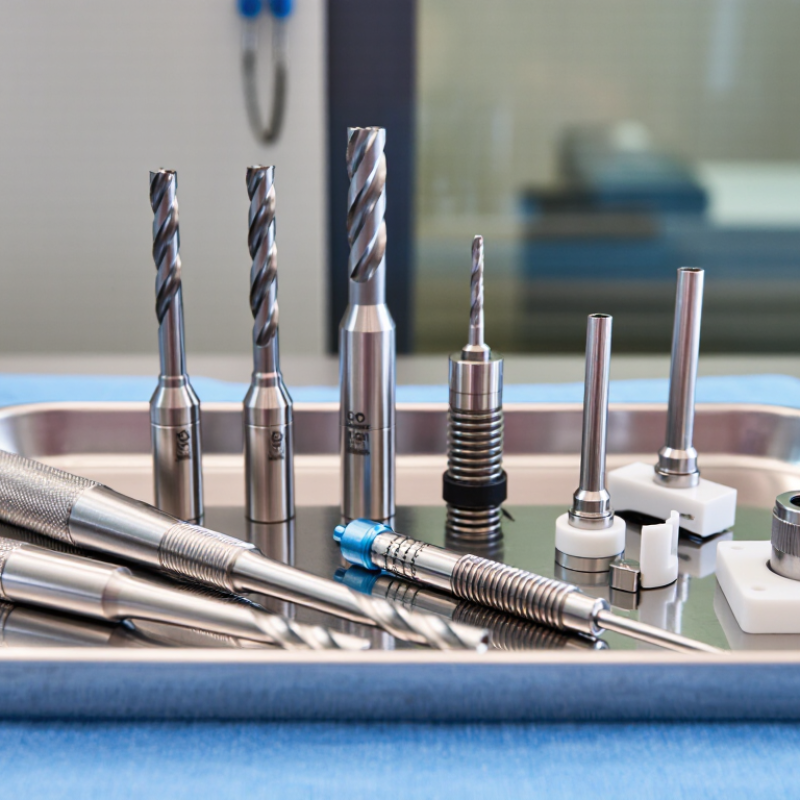
Choosing the China best implant instruments suppliers requires more than comparing catalog prices. Clinical safety, manufacturing consistency, traceability, and service quality deserve equal attention. Implant instruments include surgical drills, osteotomes, torque wrenches, depth gauges, and guided-surgery kits. Each tool must perform reliably under pressure, sterilization, and repeated clinical handling.
The market is expanding. Fortune Business Insights estimates that the global dental implants market reached approximately USD 4.6 billion in 2023, with continued growth expected through 2032. Grand View Research reports similar expansion, although market boundaries differ between studies. These differences matter. They remind buyers to test assumptions rather than trust attractive projections. The World Health Organization also reports that oral diseases affect nearly 3.5 billion people worldwide, creating long-term demand for dependable restorative care.
China offers a broad manufacturing base, from precision machining workshops to established medical-device exporters. Yet supplier capability varies widely. A professional evaluation should examine ISO 13485 certification, risk-management procedures aligned with ISO 14971, material certificates, dimensional inspection records, and sterilization compatibility. FDA, CE, and other market requirements may also apply, depending on the destination and product classification. Certifications alone are not enough.
Ask for evidence.
Request sample instruments, surface-finish data, batch traceability, and production photographs. Observe how a supplier controls burrs, corrosion, packaging damage, and calibration drift. Hospital feedback can reveal weaknesses that brochures hide. No supplier is perfect, and even a strong factory may lack experience with a specific implant system. This guide compares leading China-based implant instruments suppliers through manufacturing expertise, quality systems, customization capacity, export reliability, and realistic clinical support.
China’s Implant Instrument Market: 2023 Export Value and Growth Rate
China Best Implant Instruments Suppliers?
China’s implant instrument market requires careful data reading. Implant instruments are not reported under one universal customs category. Public trade databases usually place them within broader medical and surgical instrument codes. Under this wider scope, China’s medical-device exports reached roughly US$40 billion in 2023, while sector reports indicated a year-on-year decline of about 5% to 7%. This figure is useful, but not perfect.
The export value for implant-specific instruments should therefore be treated as an estimate, not an official standalone total. Growth also varies by product type, destination, and classification. Surgical drivers, trial components, cutting tools, and fixation instruments may follow different trade patterns. A single percentage can hide these differences.
From a sourcing perspective, reliable suppliers should provide material certificates for stainless steel or titanium components. They should also demonstrate dimensional inspection, torque testing, surface-finish control, and lot-level traceability. ISO 13485-based quality systems offer useful evidence of process discipline. Sterilization validation may be necessary for instruments supplied in sterile packaging.
Details matter.
A serious evaluation should include sample approval, tray-fit checks, corrosion testing, and documentation review. Export records alone cannot prove manufacturing quality. Nor can a low price confirm value. Some suppliers communicate well before sampling, then respond slowly after technical changes. That risk deserves attention. The market is growing unevenly, and published figures should be checked against customs codes, shipment records, and current factory evidence.
Supplier Qualification: ISO 13485, CE MDR, NMPA, and FDA Compliance
China Best Implant Instruments Suppliers?
Supplier qualification should begin with an ISO 13485 certificate, but a certificate alone proves little. Check its scope, validity, issuing body, and covered manufacturing site. The supplier should explain how design changes, supplier controls, complaints, and CAPA records are managed. Ask to see a controlled procedure, not only a polished presentation.
For European sales, verify CE marking under the Medical Device Regulation. Review the declaration of conformity, technical documentation, risk management file, and clinical evaluation. A notified body certificate may be required, depending on the device classification. For China, confirm the correct NMPA registration or filing pathway. For the United States, check FDA establishment registration, device listing, and applicable clearance requirements. These records must match the exact instrument, materials, and intended use.
Small details reveal practical experience. Request lot-level traceability for stainless steel, coating records, inspection reports, and sterilization validation when relevant. Check package seals, labels, and shelf-life evidence during sample evaluation. An on-site audit can reveal whether inspection tools are calibrated and whether rejected parts are physically segregated. I once trusted scanned certificates too quickly; that was a poor review habit. Documents can be current while production controls remain weak. Ask for recent audit findings, corrective actions, and evidence that fixes were actually verified. A reliable supplier accepts difficult questions and provides consistent answers across quality, regulatory, and production teams.
China Implant Instrument Supplier Qualification: Key Compliance Frameworks
This chart compares the official reference years of the main quality and market-access frameworks relevant to implant instrument suppliers. The years are regulatory milestones, not supplier ratings or compliance scores.
Qualification focus: Verify a current ISO 13485 quality management certificate, applicable EU MDR conformity and CE documentation, NMPA registration or filing where required, and FDA quality-system and market-access evidence for the intended product and market.
Reference sources: ISO 13485:2016, Regulation (EU) 2017/745, China’s Regulation on the Supervision and Administration of Medical Devices revised in 2021, and the FDA Quality Management System Regulation final rule published in 2024 and effective from February 2, 2026.
Product Evaluation: 316L Steel, Tolerance, Sterilization, and ISO 10993 Data
Choosing China’s best implant instrument suppliers requires more than checking price or catalog photos. Material evidence should come first. ASTM F138 and ISO 5832-1 define requirements for wrought 316L stainless steel, including chemistry, mechanical performance, and cleanliness. Ask for heat numbers, mill certificates, and independent test results. A bright surface is not proof of corrosion resistance. Tiny inclusions can remain hidden.
Tolerance affects fit, cutting accuracy, and instrument fatigue. Request drawings with dimensional limits, not vague claims such as “high precision.” Coordinate measuring machine reports should show actual values, sampling plans, and calibration dates. Sterilization validation should match the intended process. ISO 17665 covers moist heat, ISO 11135 covers ethylene oxide, and ISO 11137 covers radiation. The FDA’s 2023 ISO 10993-1 guidance also stresses biological evaluation based on contact type and duration. ISO 10993 is not a simple pass-or-fail label. Chemical characterization and risk assessment still matter.
Tips: Check three production batches, not one. Review packaging integrity after sterilization. Compare certificates with the tested sample. WHO’s Global Patient Safety Action Plan reports that roughly one in ten patients experiences harm in healthcare, so traceability deserves serious attention. I would not trust a certificate alone. Supplier audits, retained samples, and failure records reveal more. One weakness remains: many evaluations focus on metal grade, while surface residues and repeated cleaning cycles receive less attention. That gap deserves closer testing.
Manufacturing Capacity: MOQ, Lead Time, Defect Rate, and 2024 Output
China Best Implant Instruments Suppliers?
Manufacturing capacity deserves more attention than a polished catalog. Ask each supplier for its MOQ, lead time, defect rate, and 2024 output. A practical MOQ may range from 100 to 500 instruments, depending on machining complexity and surface treatment. Lower MOQs help trial orders, but they can increase unit costs and inspection pressure.
Lead time should be separated into production, quality inspection, and shipping. For standard instruments, 20 to 35 working days may be realistic after drawing approval. Custom sets often require longer planning. Request dated production records, not general promises. A reliable factory should explain its defect-rate formula, inspection stage, and corrective-action process. “Below 1%” means little without defining whether it covers cosmetic issues, dimensional failures, or returned goods.
Capacity also needs a yearly view. A supplier reporting 2024 output should identify instrument categories, monthly production, and peak-season constraints. For example, 50,000 finished pieces annually may sound strong, but capacity becomes limited if several buyers share one polishing line. Check machine lists, trained inspectors, calibration records, and batch traceability during an audit. Ask for sample inspection reports.
Numbers can still mislead.
I would compare three months of data rather than one impressive figure. Some factories may disclose output accurately but underestimate rework. That gap deserves attention. A capable supplier should accept a pilot order, provide inspection samples, and document delays without hiding uncomfortable details.
China Best Implant Instruments Suppliers? - Manufacturing Capacity: MOQ, Lead Time, Defect Rate, and 2024 Output
Anonymous industry benchmark profiles for implant-instrument manufacturers in China
| Supplier Profile |
Typical Product Scope |
MOQ
(Sets) |
Standard Lead Time
(Calendar Days) |
Final Inspection
Defect Rate |
Estimated 2024 Output
(Instrument Units) |
CNC Equipment
(Approx.) |
Common Quality Controls |
| Profile A — Small-Batch Specialist |
Custom trial instruments, surgical drills, retractors, and low-volume implant tool sets |
10–30 |
25–45 |
0.8–1.5% |
5,000–15,000 |
5–15 |
Dimensional inspection, hardness testing, visual inspection, lot traceability |
| Profile B — Mid-Scale OEM Manufacturer |
Reusable implant instruments, osteotomes, guides, impactors, and standard instrument trays |
25–100 |
20–35 |
0.4–0.8% |
20,000–60,000 |
15–40 |
Incoming material inspection, CMM checks, process inspection, cleaning validation, sampling plans |
| Profile C — High-Capacity OEM Manufacturer |
High-volume orthopedic and dental implant instrument families, modular trays, and surgical accessories |
100–500 |
15–30 |
0.2–0.5% |
60,000–180,000 |
40–100 |
Automated process monitoring, CMM measurement, 100% critical-feature inspection, batch release records |
| Profile D — Precision Micro-Instrument Supplier |
Small-diameter drills, pins, drivers, minimally invasive tools, and precision components |
20–100 |
25–50 |
0.3–0.7% |
15,000–50,000 |
10–30 |
Optical measurement, runout testing, surface-finish testing, tool-life monitoring, material certificates |
| Profile E — Integrated Finishing and Assembly Supplier |
Machined instruments with passivation, electropolishing, laser marking, assembly, and tray packing |
50–300 |
25–40 |
0.4–0.9% |
30,000–100,000 |
20–60 |
Surface-residue testing, passivation verification, barcode traceability, assembly checks, packaging inspection |
| Profile F — Custom Development and Validation Partner |
New product development, surgeon-specific instruments, prototypes, design transfer, and validation builds |
1–20 |
30–70 |
1.0–2.0% |
2,000–10,000 |
3–12 |
Design reviews, first-article inspection, tolerance verification, functional testing, risk documentation |
Data basis: Indicative 2024 manufacturing benchmark ranges for anonymous supplier profiles. MOQ means the minimum order quantity for a standard production run; lead time excludes tooling and regulatory approval; defect rate refers to nonconforming units identified during final inspection; output is measured in individual instrument units rather than complete surgical sets.
Best Supplier Comparison: Pricing, OEM Support, Warranty, and Clinical Evidence
China Best Implant Instruments Suppliers?
Supplier comparison should begin with total clinical cost, not catalogue price. Grand View Research estimated the global dental implants market at about USD 4.6 billion in 2023, with continued growth through 2030. This expansion increases supplier choice, but also creates uneven documentation. Prices deceive. A lower quotation may exclude sterilization validation, inspection, tooling, or replacement components. Request a dated quotation, material certificates, batch traceability, and clear minimum-order quantities.
OEM support deserves practical testing. Ask whether engineers can review surgical drawings, tolerances, packaging, and change-control procedures. ISO 13485 certification supports quality management, but it does not prove every product performs equally. Manufacturing audits should examine calibration records, nonconformance handling, and final inspection. These details reveal experience better than polished brochures. I would also check response times using a sample technical question. Slow communication during evaluation may become costly after launch.
Warranty terms need precision. Confirm coverage duration, excluded misuse, replacement procedures, shipping responsibility, and support for discontinued parts. Clinical evidence should be product-specific, not merely company-wide. Professional reviews, including evidence discussed by the International Team for Implantology, generally report five-year implant survival above 90% in selected cases, yet outcomes vary with loading, maintenance, bone quality, and operator skill. Ask for peer-reviewed studies, follow-up periods, sample sizes, and adverse-event reporting. A supplier may provide excellent pricing and still offer weak evidence. That risk deserves written clarification.