| Implant Material |
Titanium alloy
Commonly used for internal fixation
|
High strength-to-weight ratio, good corrosion resistance, and a modulus of elasticity generally closer to cortical bone than stainless steel.
|
Can provide stable fixation while potentially reducing stress concentration at the bone–implant interface. Its radiographic characteristics may also make fracture assessment easier than with more radiopaque metals.
|
Material selection should consider fracture pattern, load requirements, bone quality, anatomical site, and surgeon experience. Titanium is not automatically superior for every indication.
|
| Implant Material |
Stainless steel
Commonly used in trauma fixation
|
High strength, good fatigue resistance, established manufacturing history, and reliable performance in many fixation applications.
|
Its mechanical strength can support fixation in areas exposed to substantial loading when the plate is appropriately selected and applied.
|
It is generally stiffer and more radiopaque than titanium. Compatibility with other implanted metals should be assessed to limit concerns related to galvanic corrosion.
|
| Implant Material |
Cobalt–chromium alloy
Selected high-strength applications
|
High strength, high hardness, and strong wear and corrosion resistance.
|
May be considered when high mechanical strength and resistance to deformation are important.
|
Its relatively high stiffness and hardness can complicate contouring and may increase stress shielding concerns in selected situations. Application-specific evidence is required.
|
| Plate Geometry |
Anatomically pre-contoured plate
|
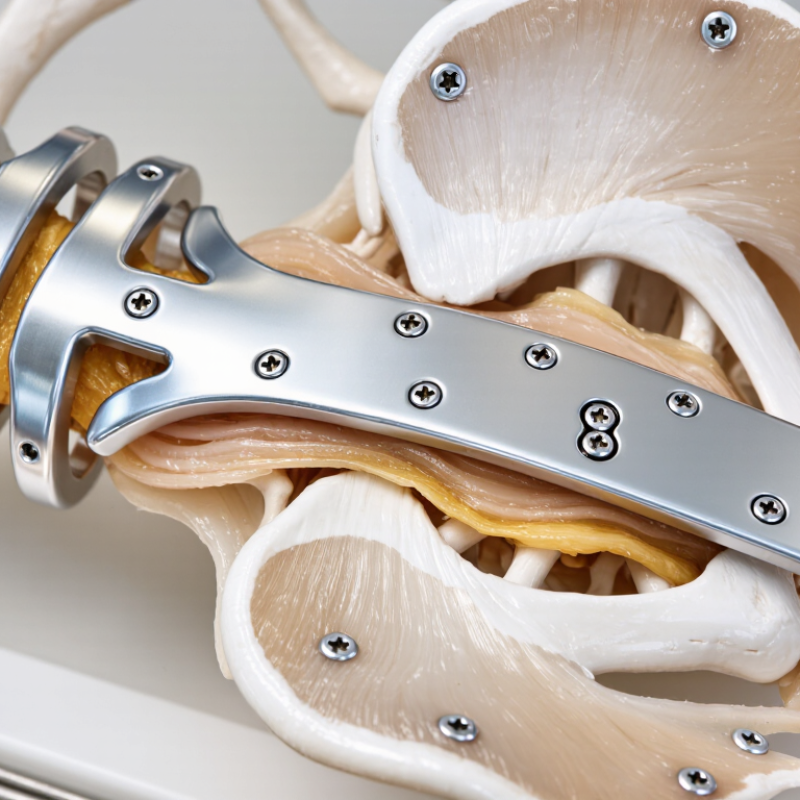
Designed to follow the typical shape of a particular bone region, reducing the amount of intraoperative bending required.
|
May shorten contouring time, help preserve plate strength, and improve fit when the patient’s anatomy matches the intended design.
|
Pre-contouring does not replace fracture reduction or individual anatomical assessment. Excessive intraoperative bending can weaken some plate designs.
|
| Fixation Principle |
Locking screw compatibility
|
Locking screws engage the plate, creating a fixed-angle construct that does not depend entirely on plate-to-bone compression.
|
Can be useful in osteoporotic bone, metaphyseal fractures, and situations where preservation of periosteal blood supply is desirable.
|
Locking technology does not eliminate the need for accurate reduction. Overly rigid constructs or inappropriate screw distribution may affect healing.
|
| Fixation Principle |
Combination holes
|
Plate holes can accommodate conventional compression screws, locking screws, or both, depending on the design.
|
Provides flexibility to combine compression, bridging, and fixed-angle fixation techniques within one plate.
|
The selected screw type, sequence, and position should match the desired biomechanical function of each part of the construct.
|
| Soft-Tissue Consideration |
Low-profile design
|
Reduces implant prominence while maintaining the required mechanical function.
|
May reduce irritation from soft-tissue prominence, particularly in areas with limited tissue coverage.
|
A thinner plate is not necessarily appropriate for a high-load fracture. Mechanical requirements must be balanced with soft-tissue considerations.
|
| Bone–Plate Interface |
Limited-contact or undercut surface
|
Minimizes the area of direct contact between the plate and the outer bone surface compared with traditional broad-contact designs.
|
May help preserve local cortical blood supply and reduce unnecessary disruption of the periosteal interface.
|
Clinical benefit depends on surgical technique, reduction quality, soft-tissue handling, and the overall stability of the construct.
|
| Mechanical Performance |
Fatigue-resistant design
|
Plate thickness, cross-sectional geometry, material properties, screw-hole configuration, and surface finish influence resistance to cyclic loading.
|
Appropriate fatigue strength can reduce the risk of plate deformation or fatigue failure while the fracture heals.
|
Laboratory fatigue performance cannot predict every clinical result. Nonunion, excessive loading, poor reduction, and improper screw placement can increase failure risk.
|
| Screw Options |
Multiple screw diameters and lengths
|
A range of screw sizes allows fixation to be adapted to bone thickness, fracture location, and available purchase.
|
Supports more appropriate screw selection and may reduce the risk of inadequate fixation or penetration of nearby joints and soft tissues.
|
Screw length and trajectory should be confirmed with appropriate imaging and anatomical landmarks. More screws do not always produce a better construct.
|
| Imaging and Navigation |
Radiographic visualization features
|
Plate shape, radiopacity, and dedicated reference holes can assist intraoperative imaging and postoperative assessment.
|
Clear visualization can support confirmation of alignment, screw position, joint clearance, and fracture healing.
|
Imaging quality depends on positioning, equipment, fracture location, and surgical technique. It should be combined with clinical evaluation.
|
| Biocompatibility |
Implant-grade, corrosion-resistant material
|
Materials intended for implantation must meet applicable medical-device requirements for biocompatibility, manufacturing quality, and mechanical performance.
|
Reduces the likelihood of material-related complications when the implant is used as intended and the patient is appropriately assessed.
|
Patient history, known metal sensitivity, infection risk, systemic health, and concurrent implants should be considered before surgery.
|
| Clinical Fit |
Anatomy- and fracture-specific selection
|
Plate choice should reflect the bone involved, fracture morphology, bone quality, soft-tissue condition, expected loading, and treatment objectives.
|
Matching the plate and fixation strategy to the clinical problem is more important than selecting a material or feature in isolation.
|
Outcomes are also influenced by reduction, soft-tissue preservation, infection prevention, rehabilitation, patient compliance, and follow-up care.
|