Why Choose Orthopedic Surgical Instruments?
Why Choose Orthopedic Surgical Instruments?
Choosing orthopedic surgical instruments is not a simple purchasing decision. It affects surgical control, tissue handling, operating time, and patient safety. A well-designed instrument should feel balanced in the surgeon’s hand. Its jaws should close evenly. Its surface should remain reliable after repeated cleaning and sterilization.
Dr. James H. Beaty, an authority in orthopaedic surgery, has emphasized, “The goal of orthopaedic surgery is to restore function.” This principle explains why instrument selection matters. A bone saw must cut with control, not unnecessary vibration. A retractor must provide exposure without placing excessive pressure on nearby tissue. A drill guide should support accurate positioning when millimeters can influence alignment.
Performance is visible in small details. Handles need secure grip during long procedures. Ratchets should engage smoothly. Joint surfaces must resist wear and corrosion. These features support consistent surgical technique, but they cannot replace professional judgment or proper training.
There is no perfect set.
Hospitals should assess clinical needs, sterilization workflows, material quality, maintenance support, and user feedback. Independent testing and documented performance are valuable. Brand reputation alone is not enough. I would also question overly confident claims, especially when they lack clinical evidence.
The best orthopedic surgical instruments help surgeons work precisely and consistently. They support experience rather than pretend to replace it. When design, reliability, and responsible evaluation come together, instrument choice becomes a practical investment in safer orthopedic care.
Musculoskeletal Conditions Affect 1.71 Billion People: The Clinical Need
Why Choose Orthopedic Surgical Instruments?
Musculoskeletal Conditions Affect 1.71 Billion People: The Clinical Need
Musculoskeletal conditions affect an estimated 1.71 billion people worldwide, according to the World Health Organization. They can limit walking, working, sleeping, and daily independence. Orthopedic surgery often requires controlled movement, accurate alignment, and dependable access to small anatomical spaces. Well-designed surgical instruments support these demands during procedures involving bones, joints, ligaments, and soft tissues.
In clinical practice, instrument selection influences more than convenience. Balanced handles can reduce hand fatigue during lengthy operations. Clear markings may support accurate measurement. Strong, properly maintained tools can help surgeons work with greater consistency. However, instruments cannot replace training or sound judgment. A technically advanced tool may still perform poorly when the wrong size is chosen. That detail is easy to overlook.
Tips: Match each instrument to the procedure and patient anatomy. Check alignment, grip, locking action, and surface condition before use. Follow validated cleaning and sterilization procedures. Keep a documented inspection routine. Small defects matter. Teams should also review difficult cases and admit when an instrument choice was less effective than expected. This practical reflection can improve future surgical planning.
Orthopedic Instrument Categories and Their Roles in Surgical Care
Why Choose Orthopedic Surgical Instruments?
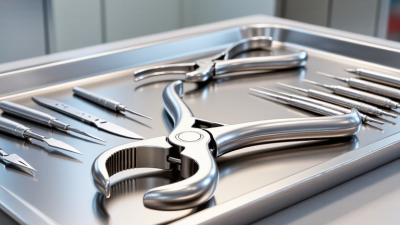
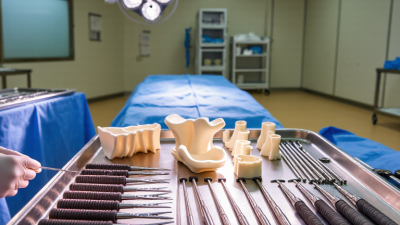
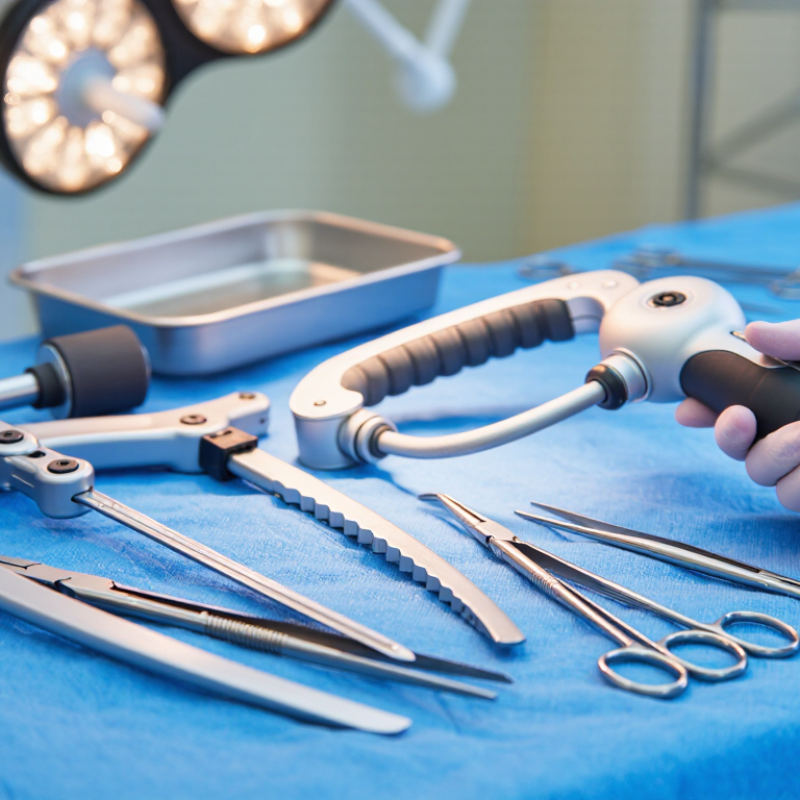
Orthopedic instruments are selected by surgical task, not appearance. Bone-cutting tools, such as saws and osteotomes, shape hard tissue with controlled force. Drills and reamers prepare precise channels for implants or fixation devices. Retractors maintain exposure while protecting muscles, vessels, and nerves. Measuring guides and alignment tools help surgeons restore length, rotation, and joint balance.
The World Health Organization reported in 2022 that musculoskeletal conditions affect about 1.71 billion people worldwide. This burden increases the need for dependable surgical workflows. Each instrument category supports a different clinical decision. Graspers provide controlled handling of tissue or implants. Screwdrivers and torque-limiting handles support stable fixation. Curettes remove damaged material from narrow spaces. Small details matter.
Sterilization compatibility, tactile feedback, dimensional accuracy, and ergonomic grip should guide selection. A balanced handle can reduce fatigue during a long procedure. A poorly matched reamer may remove excessive bone or slow preparation. No instrument is perfect. Familiar trays can still encourage complacency. The surgeon’s experience, anatomy, imaging, and procedure plan must remain central. Data from the WHO is broad, not a substitute for hospital-level outcomes. Teams should review maintenance records, failure reports, and instrument performance after surgery. This reflection is sometimes missed. Reliable orthopedic care depends on categories working together, with each tool serving a defined role rather than filling space on a tray.
Why Choose Orthopedic Surgical Instruments?
Orthopedic instruments are designed for specific surgical tasks, including cutting and reshaping bone, holding and reducing fractures, preparing fixation sites, and measuring or aligning implants. The chart shows the number of representative instrument types commonly associated with each functional category.
Material Choice: Stainless Steel, Titanium, and Corrosion Resistance
Why Choose Orthopedic Surgical Instruments?
Material choice affects weight, strength, cleaning, and corrosion resistance. Stainless steel remains common because chromium forms a protective passive layer. ASTM F899-23 identifies stainless steel grades suitable for surgical instruments. Its data support careful control of alloy composition, hardness, and heat treatment.
Titanium is lighter and highly resistant to chloride-rich fluids. Its density is about 4.5 g/cm³, compared with roughly 7.9 g/cm³ for stainless steel, according to ASM Handbook, Volume 13A. That difference matters during long procedures. Titanium also produces a stable oxide film. However, it can scratch more easily, and damaged surfaces may complicate cleaning. Lightweight does not always mean better.
Corrosion often begins in small places. Hinges, serrations, joints, and trapped saline deserve close inspection. CDC sterilization guidance lists examples such as 121°C for 30 minutes or 132°C for four minutes, but actual cycles depend on the load and device design. Repeated steam exposure can reveal weak polishing or poor passivation. ISO 5832-1 and ISO 5832-2 provide material requirements for implant-grade stainless steel and titanium, yet instrument performance needs more than a certificate. A practical evaluation should check surface finish, magnetic response, balance, joint movement, and discoloration after repeated cleaning. No material is perfect. The uncomfortable point is often ignored: careless handling can defeat excellent alloy selection.
FDA and ISO 13485 Requirements for Instrument Safety and Quality
Why Choose Orthopedic Surgical Instruments?
FDA and ISO 13485 Requirements for Instrument Safety and Quality
Orthopedic surgical instruments must support precise, controlled movement during demanding procedures. Their value depends on safety, durability, and consistent performance. In the United States, applicable instruments must follow FDA requirements based on their device classification and intended use. Manufacturers may need documented design controls, risk management, labeling, and regulatory submissions. A polished surface alone proves little.
ISO 13485 provides a structured quality management system for medical device production. It covers supplier control, process validation, complaint handling, corrective actions, and complete traceability. Each instrument should have defined material specifications, inspection records, and cleaning or sterilization instructions. Practical testing can include corrosion checks, dimensional measurements, jaw alignment, and repeated-use simulations. Small defects matter.
Tips: Review the intended use before selecting an instrument. Check lot identification and inspection records. Confirm that reprocessing instructions match your facility’s equipment. Ask for objective evidence, not broad promises. No process is flawless. Teams should revisit risks after complaints, repairs, or design changes. In practice, documentation can feel excessive, but missing records weaken confidence and delay investigations. FDA expectations and ISO 13485 controls should work together, while local requirements may still differ.
Evidence-Based Selection: Precision, Sterilization, Ergonomics, and Cost
Why Choose Orthopedic Surgical Instruments?
Orthopedic instruments deserve selection by evidence, not impressive packaging. Precision begins with jaw alignment, stable handles, and predictable force transfer. During a simulated fixation, the instrument should feel controlled, even with gloves and light blood contamination. Small play in a clamp can damage confidence and possibly compromise positioning. That risk is easy to underestimate. A 2023 CDC NHSN report also shows why orthopedic infection comparisons need procedure-specific data, rather than broad hospital averages.
Sterilization performance must be tested, not assumed. Instruments should tolerate validated steam cycles, permit complete cleaning, and dry without hidden moisture. The CDC classifies critical surgical devices as requiring sterilization before use. WHO’s Global Report on Infection Prevention and Control 2022 estimates healthcare-associated infections affect 7 in 100 patients in high-income countries and 15 in 100 in low- and middle-income countries. Ergonomics matters too. Balanced weight, readable markings, and a smooth ratchet can reduce awkward wrist loading during long procedures. Cost should include repairs, inspection time, tray density, and replacement frequency. The cheapest purchase may create expensive delays. A practical audit should compare failure logs, sterilization records, and user feedback over several months. Even then, the decision remains imperfect; laboratory performance cannot fully reproduce every operating-room condition.