China Best Surgery Instruments Suppliers for Global Buyers?

Choosing the best China surgery instruments suppliers requires more than comparing prices or factory photographs. Global buyers need evidence, consistency, and clear communication throughout the purchasing process. A reliable supplier should demonstrate experience with surgical scissors, forceps, retractors, needle holders, and other precision instruments. Material specifications should be documented, especially for stainless steel grades, surface finishing, and corrosion resistance. Small details matter.

This guide examines how international buyers can evaluate Chinese manufacturers with greater confidence. It considers production capability, quality-control procedures, inspection records, packaging standards, and export experience. Buyers should also review product traceability, sample performance, and the supplier’s response to technical questions. A polished website is not enough. Factory audits, independent inspections, and carefully written purchase specifications can reveal important differences between suppliers. However, no evaluation method is perfect. Even experienced buyers may overlook communication gaps, changing production teams, or inconsistent batch quality. That weakness deserves attention.

Regulatory expectations differ across markets, so buyers must confirm applicable requirements before ordering. Suppliers should provide accurate documentation and support lawful import procedures without making unsupported compliance claims. Product samples can expose practical issues, such as stiff hinges, uneven jaws, or rough edges. These observations are more useful than general promises. By comparing suppliers through transparent criteria, global buyers can reduce avoidable risks and build more dependable sourcing relationships. The goal is not simply to find the cheapest manufacturer. It is to identify a capable, accountable partner for safe and consistent instrument supply.

China Best Surgery Instruments Suppliers for Global Buyers?

Types of Surgical Instruments Supplied by Chinese Manufacturers

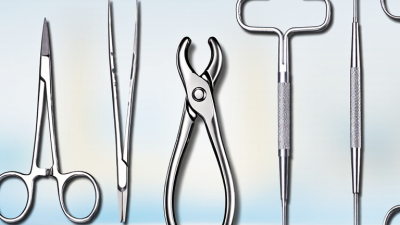
Chinese surgical instrument suppliers serve hospitals, distributors, and specialist clinics worldwide. Their product ranges often cover general surgery, orthopedics, dentistry, ophthalmology, and minimally invasive procedures. Common items include tissue forceps, hemostatic clamps, surgical scissors, needle holders, retractors, and scalpel handles.

Many factories also produce orthopedic rasps, bone cutters, curettes, and modular instrument sets. Laparoscopic suppliers may provide graspers, dissectors, trocars, and reusable hand instruments. Stainless steel remains widely used because it supports repeated cleaning and sterilization. Some manufacturers offer titanium options for lighter handling and reduced magnetic response. Disposable sterile instruments are available too, but buyers must verify packaging, shelf life, and destination-market requirements.

Experienced buyers usually inspect more than polished surfaces. They check jaw alignment, ratchet movement, tip sharpness, surface finish, and laser markings. Ask for material reports, inspection records, sterilization validation, and batch traceability. Quality systems such as ISO 13485 can support confidence, but certification alone does not prove every instrument performs well. It is an important limitation. Product samples should be tested under realistic clinical workflows, including repeated autoclave cycles when applicable. Some catalog descriptions remain too broad. Clear drawings, tolerances, and instrument photographs prevent expensive misunderstandings. Supplier communication also matters, especially when custom trays or procedure-specific sets are required.

Key Standards for Evaluating Chinese Surgical Instrument Suppliers

China Best Surgery Instruments Suppliers for Global Buyers?

Choosing a Chinese surgical instrument supplier requires more than comparing prices or polished catalogs. Buyers should verify an ISO 13485 quality management system and confirm its certificate scope. The scope should cover the exact instruments being supplied. Ask for recent audit records, material certificates, inspection reports, and traceability procedures. Ask for evidence.

Material quality matters greatly in scissors, forceps, retractors, and clamps. Request documentation for stainless steel grades, surface treatment, hardness, corrosion resistance, and dimensional tolerances. Samples should be tested through repeated opening, closing, gripping, and cleaning cycles. A mirror finish can look impressive, but it may hide weak edges or uneven joints. Do not rush.

Reliable suppliers explain how they control incoming materials, production changes, final inspection, packaging, and complaint handling. They should provide clear instructions for cleaning, disinfection, sterilization, and reuse, aligned with applicable international requirements. Destination-market registration and labeling must also be checked independently. A certificate alone does not prove complete compliance.

Communication is another practical test. Can the supplier answer technical questions without vague promises? Can they identify a batch from a carton label and investigate a defect quickly? Small trial orders often reveal more than long presentations. One point deserves reflection: buyers sometimes demand perfect documents while ignoring inconsistent samples. That mistake can be expensive. A strong evaluation compares paperwork, factory controls, physical performance, and after-sales responsiveness together.

China Best Surgery Instruments Suppliers for Global Buyers? - Key Standards for Evaluating Chinese Surgical Instrument Suppliers

No. Evaluation Dimension Key Standard or Benchmark Evidence to Request Practical Buyer Check Suggested Weight
1 Quality Management System A current ISO 13485 certificate is the preferred baseline for manufacturers of medical devices. ISO 9001 may support general quality control but does not replace ISO 13485. Certificate, certification scope, issuing body, expiry date, and audit status. Confirm that the certificate covers the actual surgical instruments and manufacturing site, not only trading activities. 20%
2 Regulatory Documentation Products should have documentation appropriate to the destination market, such as Chinese NMPA requirements or EU MDR requirements where applicable. Declaration of conformity, product classification, technical file index, registration or listing information, and authorized representative details when required. Check that the model numbers, intended use, materials, and manufacturer information match the goods being quoted. 15%
3 Material Grade and Biocompatibility Material selection should be documented and suitable for the intended clinical use. Common stainless-steel references include ISO 7153-1 and applicable national or regional material specifications. Material certificates, heat or batch traceability, corrosion-resistance test results, and biocompatibility assessment where relevant. Verify that the stated steel grade is consistent across drawings, inspection records, samples, and purchase documents. 15%
4 Design, Function, and Dimensional Control Critical dimensions, jaw alignment, cutting performance, articulation, surface finish, and tip geometry should be defined in controlled drawings or specifications. Approved drawings, tolerance tables, inspection plans, functional test methods, and sample inspection reports. Evaluate production samples using calibrated gauges and confirm repeatability across multiple lots. 15%
5 Sterilization Compatibility Reusable instruments should be compatible with the validated reprocessing method specified in the instructions for use. Steam sterilization validation is commonly addressed under ISO 17665 when applicable. Instructions for use, cleaning and disinfection guidance, sterilization parameters, validation reports, and reuse-cycle information. Confirm that the recommended temperature, exposure time, drying conditions, and maximum reuse cycles match the buyer’s hospital protocols. 10%
6 Packaging and Product Protection Packaging should protect the instrument from contamination, corrosion, moisture, and transport damage. Sterile-barrier packaging, when used, should be assessed against ISO 11607 requirements. Packaging specifications, seal-strength or integrity tests, transport simulation results, labeling artwork, and storage conditions. Inspect packaging after shipment and confirm lot identification, UDI or local labeling requirements, and shelf-life claims where applicable. 8%
7 Traceability and Change Control A controlled system should link finished instruments to raw-material batches, production records, inspection results, and release decisions. Lot-number procedure, device history records, nonconformity procedure, corrective-action records, and engineering-change process. Ask how the supplier notifies buyers before changing material, dimensions, subcontractors, packaging, or manufacturing location. 7%
8 Inspection and Testing Capability Inspection equipment should be suitable for the product risks and maintained through calibration or verification. Test methods should be documented and reproducible. Calibration records, incoming and final inspection plans, sampling procedures, test reports, and equipment inventory. Review how the supplier controls sharpness, alignment, hardness, surface defects, corrosion, and mechanical operation. 5%
9 Manufacturing Capacity and Delivery Reliability Capacity claims should be supported by equipment, staffing, documented production planning, and a measurable record of on-time delivery. Capacity plan, lead-time assumptions, production schedule, outsourcing list, business-continuity plan, and recent delivery performance data. Separate standard catalog items from customized products and confirm minimum order quantities, tooling ownership, and replenishment lead times. 3%
10 After-Sales Support and Risk Management The supplier should maintain complaint handling, adverse-event escalation, corrective-action, recall, and technical-support procedures appropriate to the destination market. Complaint procedure, response-time commitment, recall process, warranty terms, technical files, and customer-service contacts. Use a written quality agreement defining responsibilities for complaints, investigations, replacement products, and regulatory reporting. 2%
Buyer assessment method: Score each dimension from 0 to 5 after document review, sample inspection, and—where appropriate—an on-site or remote audit. Multiply the score by the suggested weight to compare suppliers consistently. Regulatory requirements vary by destination country and product classification, so final approval should be completed by the buyer’s qualified regulatory and quality personnel.

Leading Supplier Categories for Global Medical Equipment Buyers

China Best Surgery Instruments Suppliers for Global Buyers?

Leading Supplier Categories for Global Medical Equipment Buyers

Global buyers should compare suppliers by product category, not catalog size. Surgical hand instruments require precise jaws, smooth hinges, corrosion-resistant steel, and reliable passivation. During sampling, inspect scissors under bright light. Check whether forceps close evenly without excessive pressure. Small defects can affect clinical handling.

Endoscopic and minimally invasive suppliers need stronger technical evidence. Ask about image quality, sterilization compatibility, repair procedures, and replacement parts. Electrosurgical equipment suppliers should provide safety testing, user instructions, and traceable production records. Orthopedic instrument suppliers need accurate sizing, durable coatings, and compatibility with approved implants. Sterilization equipment suppliers should explain cycle validation, chamber performance, and maintenance support.

Tips: Request samples before bulk orders. Review ISO 13485 certification and destination-market registration. Ask for batch records, material certificates, inspection reports, and packaging tests. A factory audit can reveal more than a polished website. Video inspections help, but they are not equal to an in-person visit. No checklist is perfect. Buyers should also test instruments after repeated cleaning and autoclave cycles. One overlooked detail is often the handle texture; wet gloves can expose poor design quickly. Allow time for corrective actions, because the cheapest quotation may create higher costs later.

Quality Control, Certifications, and Regulatory Compliance

For global buyers, selecting Chinese surgical instrument suppliers requires more than comparing prices. Quality control should be visible on the factory floor. Experienced teams inspect stainless steel composition, jaw alignment, hinge movement, surface finish, and packaging integrity. A useful audit may include calibrated gauges, batch records, and samples from repeated production lots. Small details matter. A clamp that feels stiff can signal poor finishing or inconsistent assembly.

Reliable suppliers should provide relevant certifications and technical documents for the target market. These may include ISO 13485 quality management certification, product risk files, sterilization validation, biocompatibility evidence, and traceability records. Buyers should verify certificate scope, issuing body, expiry dates, and exact product models. Regulatory compliance is not transferable between countries. A document for one market may not satisfy another authority. Ask for declarations, inspection reports, and change-control procedures before placing large orders.

Practical communication also reveals supplier maturity. Request a pre-production sample, then compare it with the approved drawing and agreed tolerances. Photograph packaging labels and record lot numbers during incoming inspection. In my experience, strong suppliers welcome difficult questions and explain nonconformities without hiding them. Yet no audit is perfect. Human inspection can miss microscopic burrs, and certificates cannot replace hands-on testing. Build independent verification into the purchasing plan, especially for critical instruments. Consistent evidence is more valuable than polished promises.

How to Select and Purchase Surgical Instruments from China

Selecting surgical instruments from China requires more than comparing prices. A reliable buyer should verify the supplier’s manufacturing experience, quality system, and export documentation. Ask for certificates, product specifications, material details, and inspection records before discussing large quantities. ISO 13485 certification can support confidence, but it should not replace independent checks.

Request samples before placing a production order. Examine the hinge movement, jaw alignment, surface finish, and locking force under good lighting. For stainless steel instruments, confirm the grade and corrosion resistance through documented test results. Check whether the instruments suit cleaning, disinfection, and sterilization procedures used in your facility. A sample may look excellent while hidden tolerances remain inconsistent.

Use a written purchase agreement with drawings, accepted tolerances, packaging requirements, and batch traceability. Consider a pre-shipment inspection by an independent laboratory. Ask how defects are recorded and corrected, not only how they are prevented. Communication matters. Delayed answers can become costly after shipment. I have seen buyers focus too heavily on unit price and overlook inspection fees, replacement terms, and customs paperwork. That approach seems efficient, but it often creates avoidable pressure. Keep technical records, approval samples, and supplier communications together. Small details matter.

China Surgical-Instrument Sourcing: Export Market Context

Loading official trade data…

The chart shows China’s annual export value for HS 901890, a broad international customs category covering medical, surgical, dental and veterinary instruments and appliances. Use this market indicator to understand sourcing scale, but evaluate individual suppliers separately through ISO 13485 certification, product registration, sterilization validation, traceability, quality inspection and pre-shipment testing.

Source: United Nations Comtrade API, reporter China, export flow, HS 901890, partner world. The category is broader than surgical instruments alone.